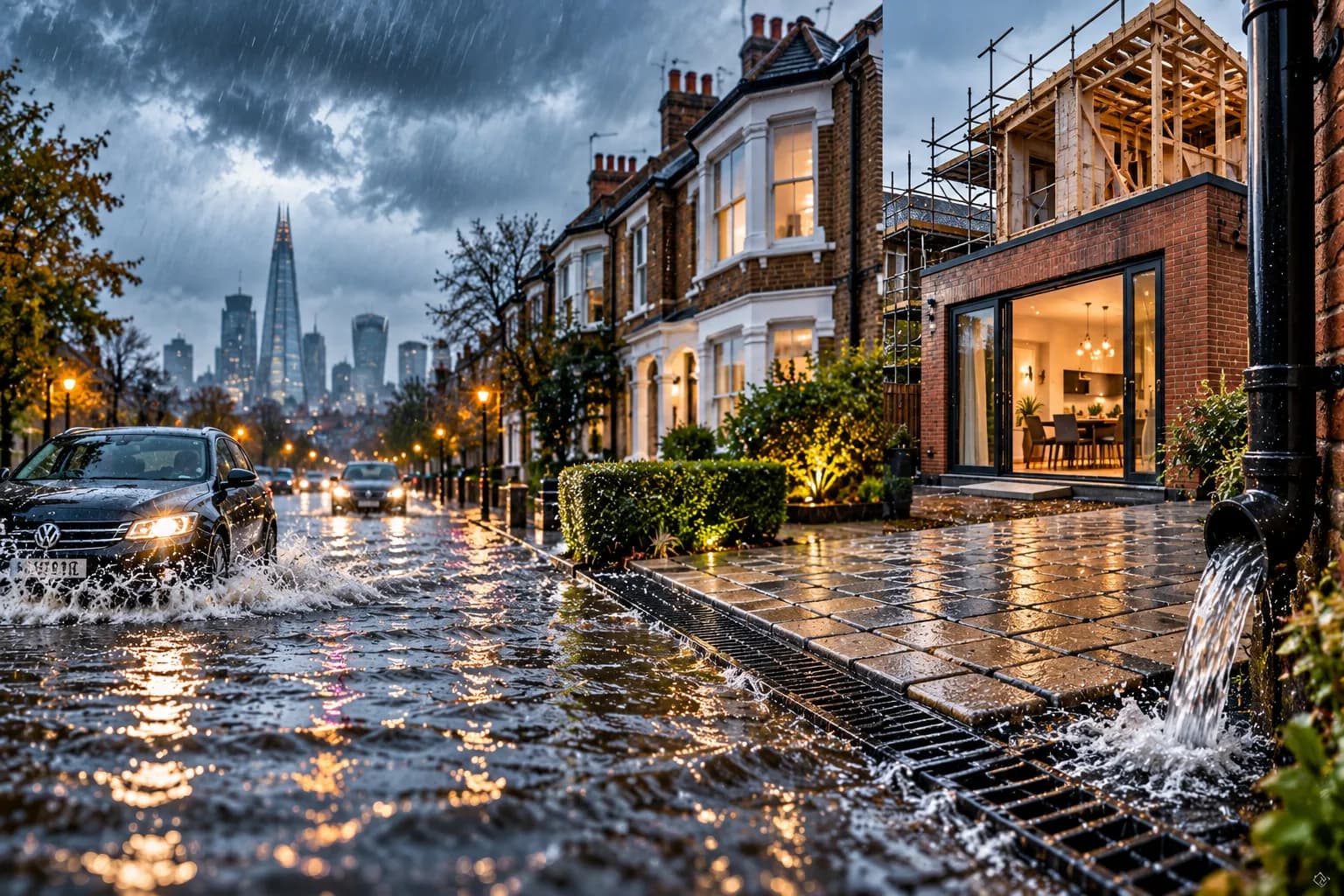
After Storm Austen and Storm Boelo, London homeowners are being urged to check drains, driveways and extension drainage before more heavy rain.
The recent storms that swept across the UK have brought renewed attention to the damage severe autumn weather can cause to homes and businesses. Storm Austen and Storm Boelo struck in quick succession between 23 and 25 October 2026, bringing strong winds, heavy rainfall, flooding and widespread disruption.
According to the Met Office, Storm Austen affected southern parts of the country before Storm Boelo brought another period of severe weather, particularly across northern Britain. The unsettled conditions have raised fresh concerns about how well properties are prepared for the wetter winter months.
While flooding is often associated with overflowing rivers or extreme weather, some of the risks facing London homeowners are much closer to home.
Blocked underground drains, poorly designed driveways and overlooked drainage arrangements during home extensions can all contribute to rainwater accumulating around residential properties.
Government Environment Agency guidance identifies more than 4.6 million properties across England in areas at risk of surface water flooding, highlighting the importance of managing rainwater before it becomes a serious problem.
With further periods of heavy rainfall possible throughout autumn and winter, property specialists are encouraging homeowners to pay closer attention to areas that are easily overlooked during routine home maintenance.
Blocked Drains Could Be Hiding a Bigger Problem
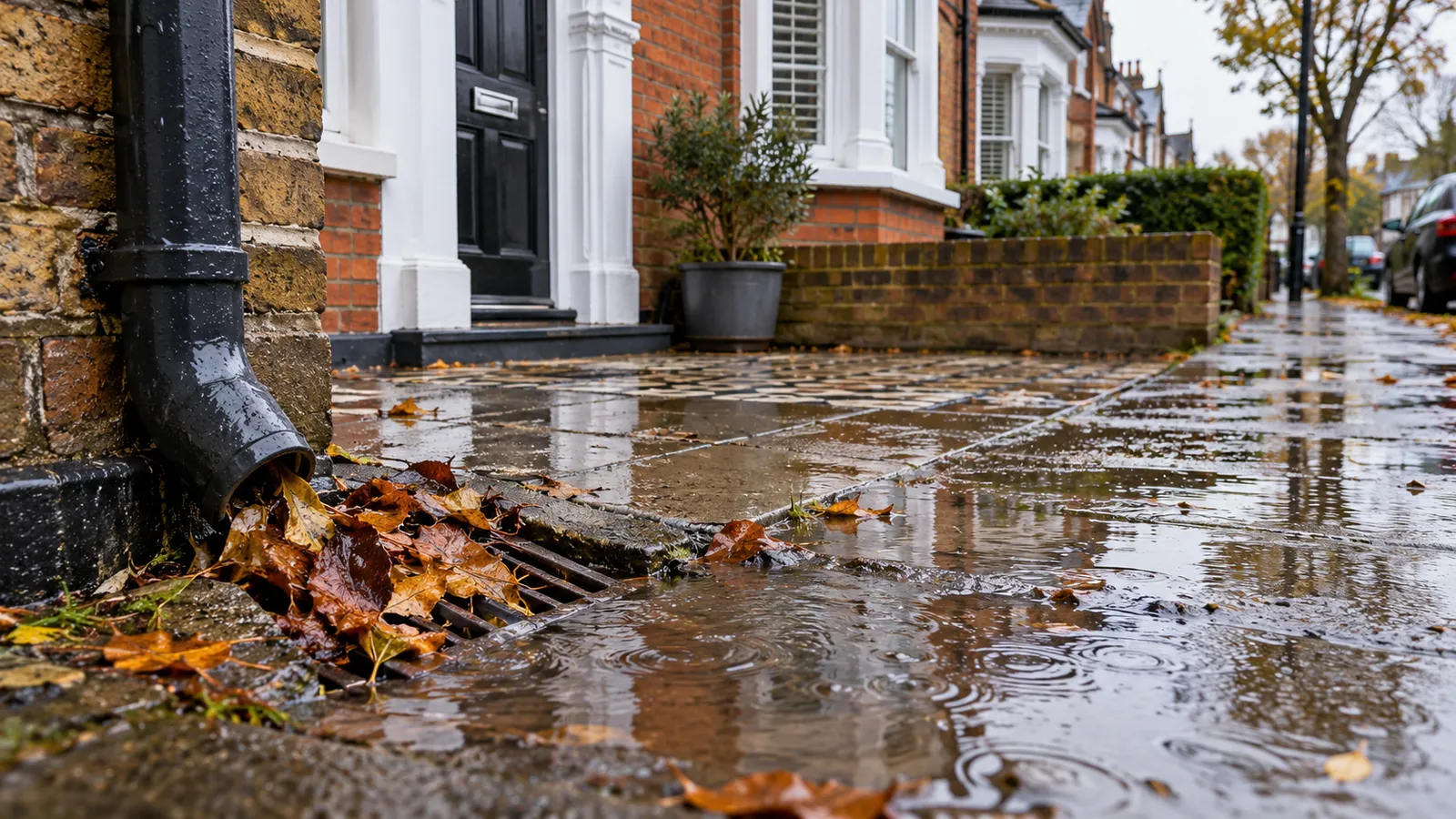
One of the most common issues homeowners may encounter during prolonged rainfall is a drainage system that cannot remove water quickly enough.
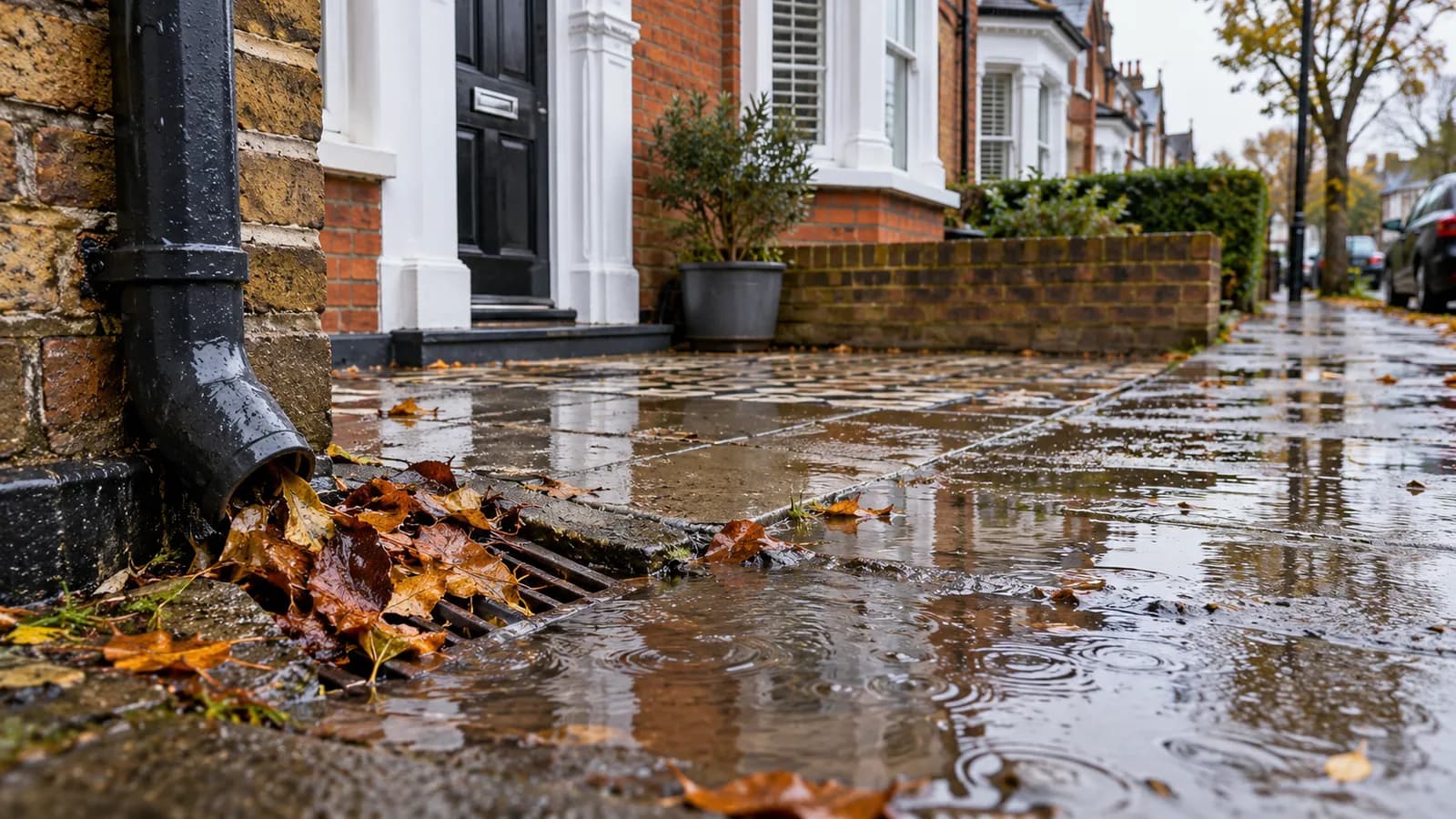
Over time, underground pipes and external drains can become obstructed by leaves, silt, grease, debris and other materials. These blockages may go unnoticed during dry weather but become apparent when increased rainfall places additional pressure on the system.
Water collecting around external drainage points, slow-draining gullies and unpleasant smells can all indicate a potential problem.
London drainage specialists BDS Drainage provide drain unblocking, CCTV drain surveys and drainage repairs for residential and commercial properties.
A professional CCTV drain survey can help identify hidden issues such as root intrusion, displaced pipe joints, structural damage and stubborn obstructions without immediately requiring extensive excavation.
However, not every instance of standing water is caused by a blocked private drain. Surface water flooding can also occur when rainfall overwhelms wider drainage infrastructure or when the surrounding ground cannot absorb water quickly enough.
For homeowners who have experienced repeated drainage problems, investigating the underlying cause is often more effective than repeatedly clearing visible surface water.
Routine drain maintenance, keeping external gullies clear and seeking professional advice when warning signs appear can help reduce avoidable drainage problems during wet weather.
Could Your Driveway Be Directing Rainwater Towards Your Home?
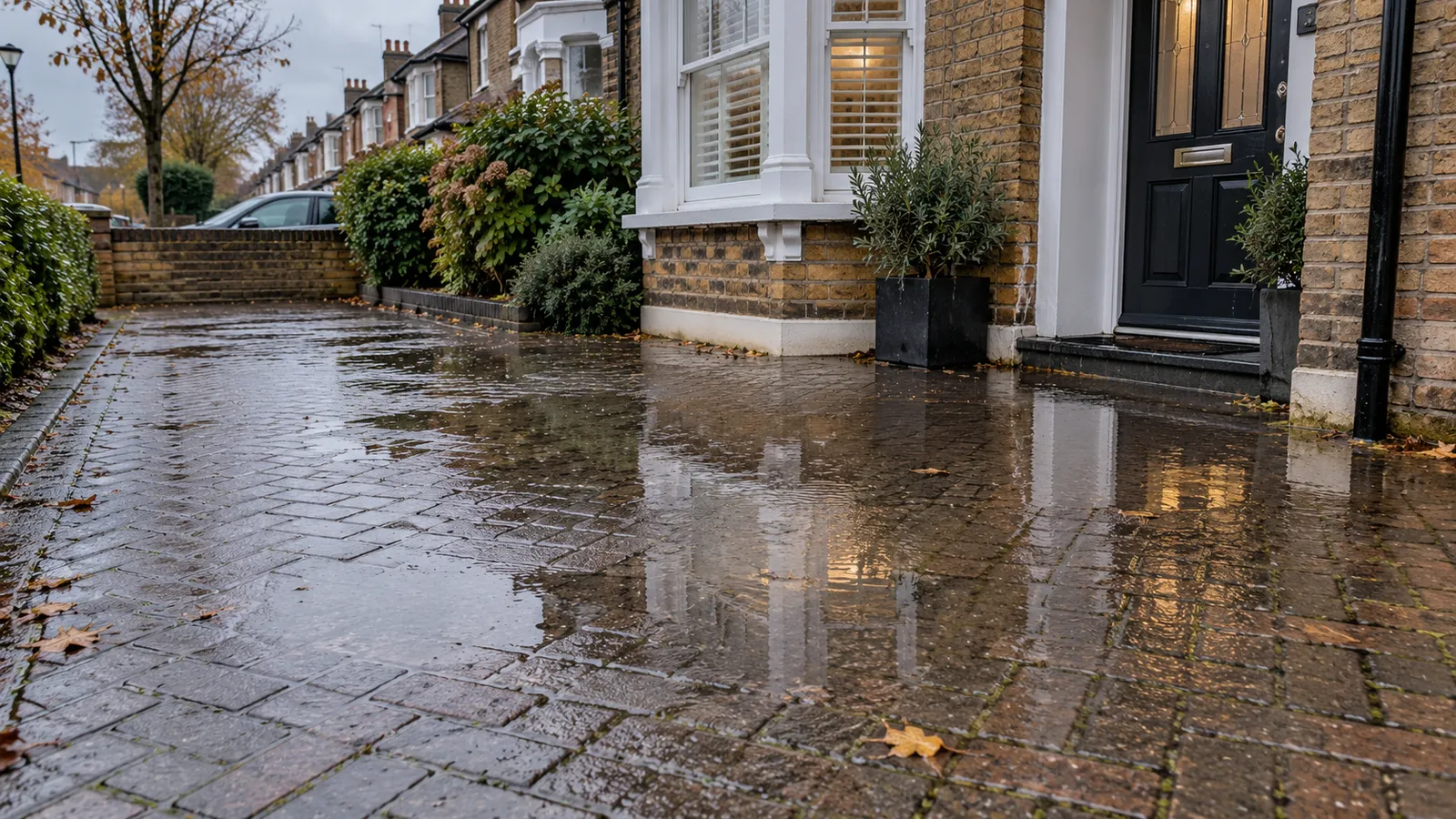
Another overlooked contributor to localised flooding is the design and condition of driveways and other paved outdoor surfaces.
Across London, front gardens have increasingly been converted into parking areas, creating additional hard surfaces around residential properties.
When rain falls onto impermeable paving, it cannot soak directly into the ground. Instead, the water runs across the surface and must be managed through suitable gradients, permeable areas or drainage systems.
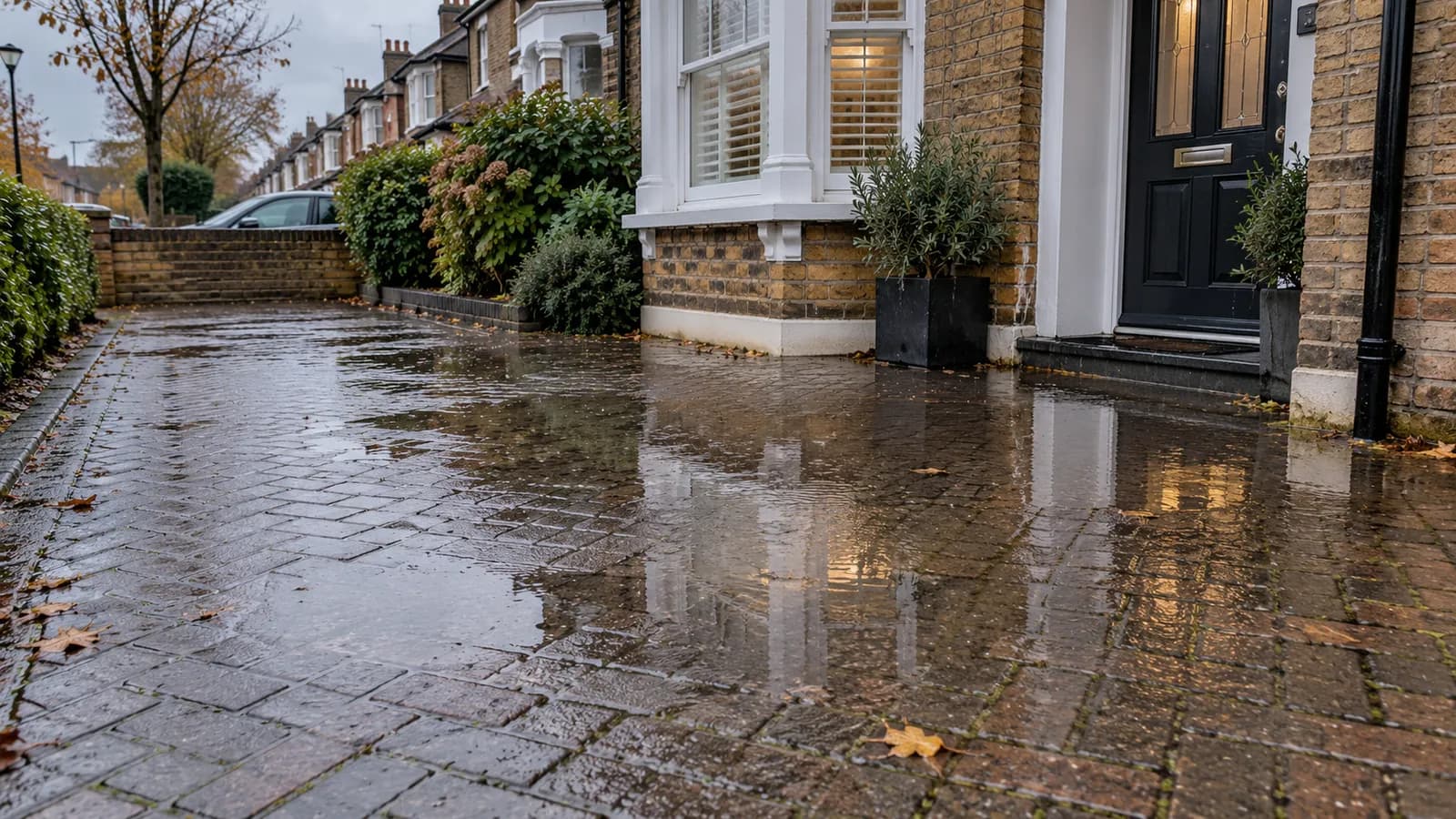
If a driveway slopes towards the property or its drainage arrangements are inadequate, rainwater may collect near external walls, garages or entrances.
Specialists at Stone Art UK, which installs block paving, resin-bound and tarmac driveways across Greater London, provide driveway repairs and drainage solutions alongside new installations.
The suitability of a driveway surface depends on more than its appearance. Ground conditions, installation methods, drainage capacity and the direction of surface water flow all need consideration.
Permeable paving systems can help rainwater pass through appropriately designed surfaces, while conventional impermeable driveways may require alternative arrangements to direct water safely into suitable drainage areas.
Not all resin-bound, block-paved or tarmac installations are permeable, making the specification and underlying construction particularly important.
Government planning guidance also places restrictions on certain impermeable front garden surfaces. In England, constructing a traditional impermeable driveway of more than five square metres generally requires planning permission unless rainwater is directed to an appropriate permeable area.
Homeowners considering a new driveway or repairs to an existing installation should therefore consider how the work will affect rainwater movement, particularly when the property has already experienced pooling or drainage problems.
Home Extensions Could Unintentionally Change How Rainwater Flows
With space at a premium across London, home extensions and property refurbishments remain an attractive option for homeowners looking to improve their living environment without moving.
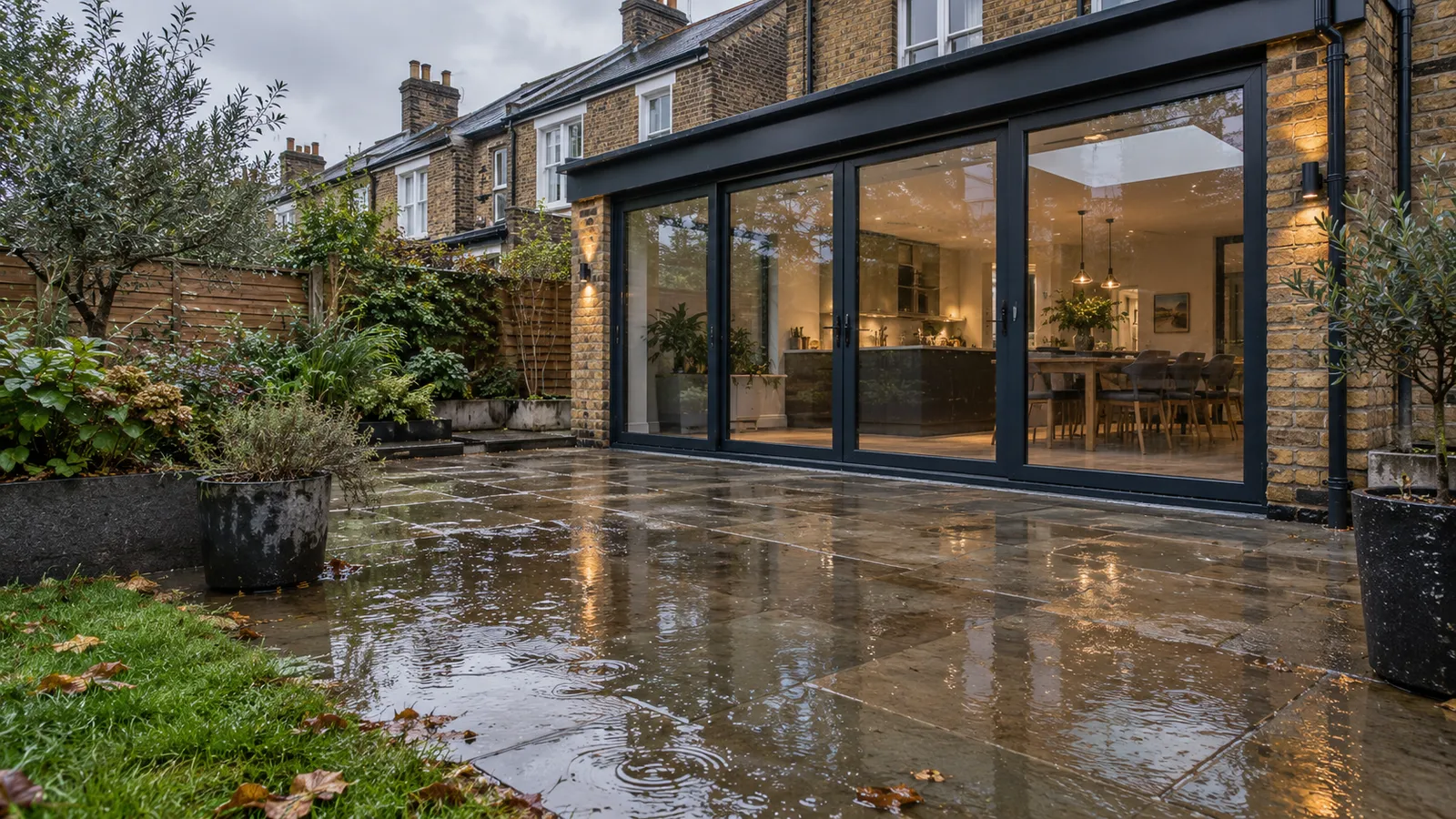
However, changes to a property's structure and surrounding ground levels can also affect how rainwater travels across the site.
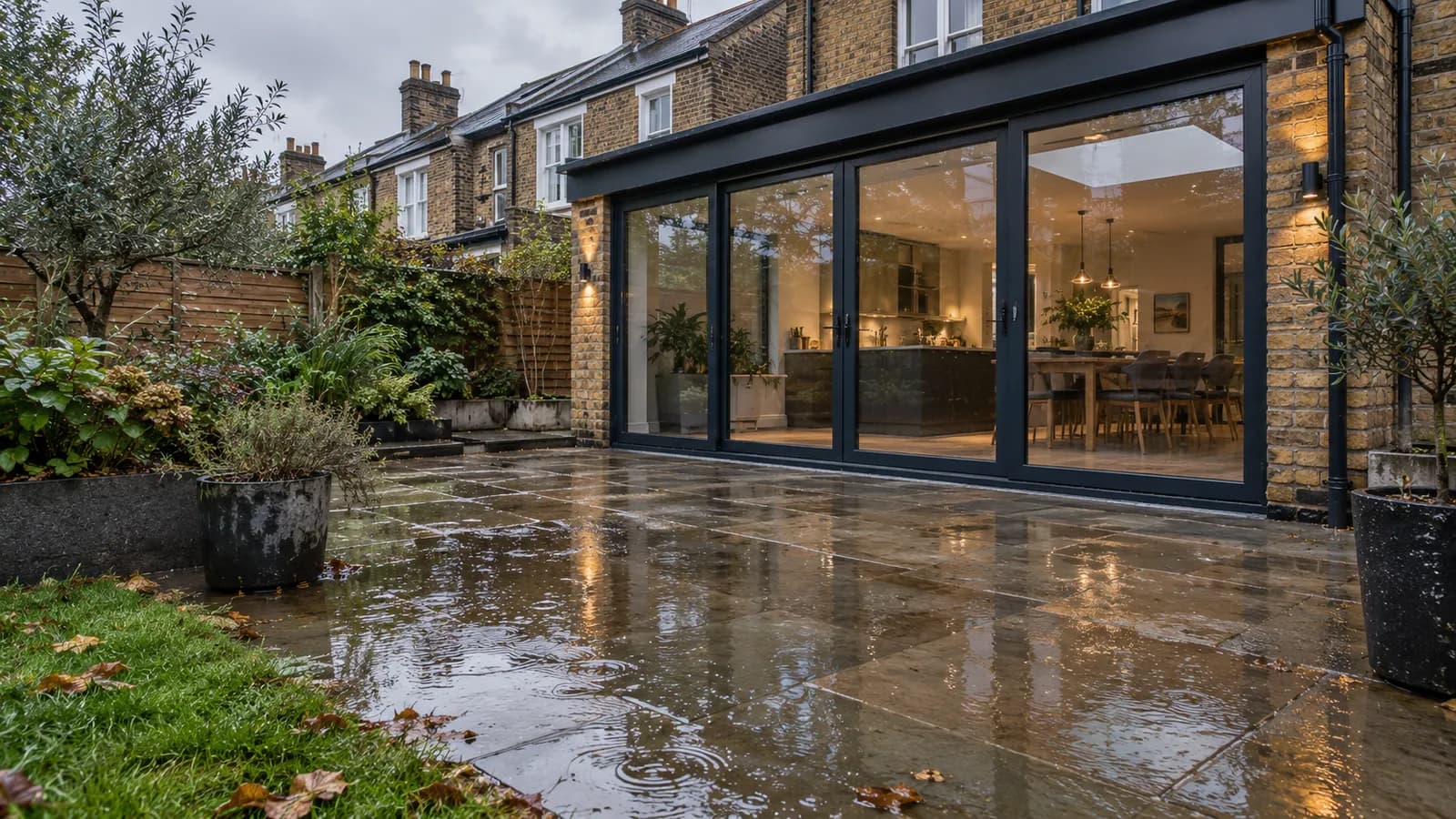
A rear extension may increase the amount of roof area that needs to be drained, while new patios, pathways and altered garden levels can change where surface water collects.
Problems can arise when existing drainage arrangements are not properly assessed before building work begins.
London-based Nova Design & Build specialises in property refurbishments, house extensions and loft conversions, making the relationship between building design and drainage particularly relevant to residential improvement projects.
Before beginning an extension, homeowners should consider where existing rainwater pipes discharge, whether external ground levels will change and how additional roof drainage will be accommodated.
Suitable drainage arrangements should form part of the wider design process rather than being treated as an afterthought once construction is nearly complete.
This is especially important where properties have limited outdoor space, neighbouring buildings sit close together or extensions are being constructed alongside new patios and driveways.
Poorly planned alterations can leave water collecting against external walls or moving towards areas that were previously unaffected.
Careful site assessment and coordinated planning between designers, builders and drainage specialists can help identify these potential problems before work begins.
Why Surface Water Flooding Is a Concern for London
Surface water flooding occurs when rain falls faster than the ground or drainage infrastructure can absorb or remove it.
Unlike river flooding, it can affect properties located far from major waterways, including streets that have no obvious history of flooding.
London's combination of densely developed neighbourhoods, older drainage infrastructure and extensive paved surfaces creates particular challenges when intense rainfall occurs.
The Environment Agency's national flood-risk mapping highlights how surface water can accumulate in locations where water has limited opportunities to drain away.
Although the recent storms caused some of their most severe flooding impacts outside London, the disruption serves as a reminder that homeowners should consider the condition of their own properties before further periods of heavy rain.
External walls, garden levels, driveway surfaces, drainage gullies and rainwater pipes can all influence how effectively a property manages rainfall.
Importantly, even a well-maintained private drainage system cannot guarantee protection against flooding caused by overwhelmed public infrastructure or exceptionally severe weather.
Five Checks Homeowners Can Make Before the Next Heavy Downpour
There are several practical steps London homeowners can take to identify potential issues before winter weather places further pressure on their properties.
Check external drains and gullies. Remove accessible leaves and surface debris, and investigate drains that repeatedly become blocked.
Look for standing water around driveways. Persistent puddles, particularly near garages or external walls, may indicate unsuitable gradients or drainage problems.
Inspect gutters and downpipes. Make sure rainwater is being directed towards appropriate drainage points rather than overflowing against the building.
Review recent building or landscaping work. Consider whether extensions, patios or driveway alterations have changed how water moves around the property.
Investigate recurring damp or flooding. Water repeatedly entering garages, basements or ground-floor rooms should be assessed to establish the underlying cause.
Homeowners can also use the Government's online flood-risk services to check current warnings and understand the longer-term surface water flood risk in their area.
Drainage chambers should never be opened or entered by untrained homeowners, and people should avoid entering floodwater or approaching potentially unsafe electrical installations.
Preparing Properties for Wetter Weather
The recent storms have demonstrated how quickly severe weather can disrupt everyday life, while drawing attention to the importance of maintaining homes before problems develop.
For London homeowners, flood prevention is not simply about preparing for major storms. It also involves understanding how drainage systems, driveways and building alterations interact with the surrounding environment.
From investigating underground blockages to reviewing driveway drainage and ensuring extensions are properly designed, small decisions made during property maintenance and improvement projects can have a significant influence on how rainwater is managed.
As autumn moves towards winter, identifying potential weaknesses early could help households avoid preventable property damage and unexpected repair costs.
Although no individual improvement can eliminate every flooding risk, a combination of suitable drainage, considered building design and regular maintenance can leave properties better prepared for periods of heavy rainfall.
References