The City of London operates unlike anywhere else in Britain. This compact district, barely one square mile in size, maintains its own police force, elects its own Lord Mayor, and preserves ceremonies that date back centuries; yet it also houses one of the world's foremost financial centres.
What Makes the City Distinct
The City of London is not simply a district of the capital; it is a ceremonial county with its own local authority, the City of London Corporation. This ancient body predates Parliament itself and continues to govern the Square Mile through a system that blends medieval tradition with modern administration.
The Corporation is headed by the Lord Mayor of London, a position separate from the Mayor of London who oversees the entire capital. The Lord Mayor serves a one-year term and acts as the City's chief magistrate, ambassador, and chair of the Corporation's decision-making bodies. Each November, the Lord Mayor's Show, a parade dating back to the thirteenth century, processes through the streets to mark the inauguration of the new Lord Mayor at the Royal Courts of Justice.
The Boundary Dragons
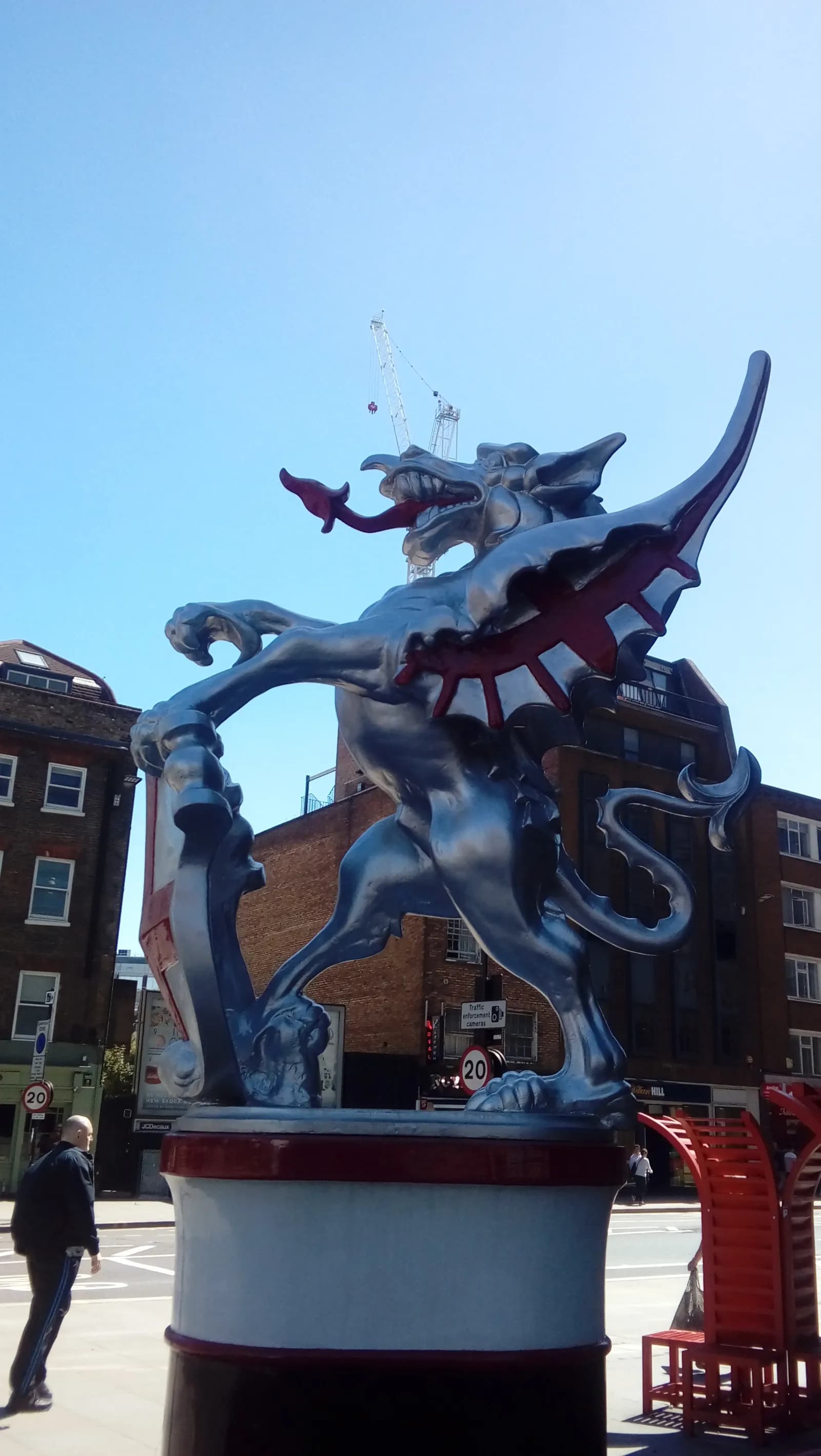
Visitors entering the City may notice striking silver dragons mounted on stone plinths. These thirteen boundary markers delineate the City's borders. The dragon at Temple Bar was designed by C. B. Birch in 1880, whilst two statues on Victoria Embankment, designed by City Architect J. B. Bunning in 1849, were originally mounted above the entrance to the Coal Exchange on Lower Thames Street until their relocation in 1963.
The remaining dragons stand at: Victoria Embankment (western boundary, both north and south sides), Temple Bar (Strand/Fleet Street), Holborn (by Chancery Lane Station, two dragons), Farringdon (Charterhouse Street/Farringdon Road), Aldersgate (Baltic Street West/Goswell Road), Bishopsgate (Norton Folgate/Worship Street/Shoreditch High Street), Aldgate (Aldgate High Street/Whitechapel High Street), Tower Hill (Byward Street/Tower Hill), London Bridge (south end, east and west sides), and Blackfriars Bridge (south end).
These markers commemorate the seven original gates to the walled City: Aldersgate, Aldgate, Bishopsgate, Cripplegate, Ludgate, Moorgate, and Newgate. All have long since been demolished, but the sites of the ancient bars, where travellers once paid tolls, remain marked by these distinctive statues.
The Guildhall and Ancient Institutions
At the heart of the City stands the Guildhall, a Grade I-listed building that has served as the Corporation's administrative centre since the medieval period. The building houses the City of London Corporation's administrative offices and the magnificent Great Hall, which has hosted trials, banquets, and ceremonies for centuries. It was at the Guildhall that Lady Jane Grey was proclaimed queen in 1553, and where Winston Churchill received the Freedom of the City in 1943.
The City is divided into twenty-five wards, each historically represented by an alderman. These ancient subdivisions, many bearing names that date back to Anglo-Saxon times, form the electoral basis for the City's unique voting system. Unlike other UK local authorities, the City of London Corporation grants votes to both residents and businesses within its boundaries, a practice that has attracted periodic controversy but remains integral to the City's governance structure.
The Modern Square Mile
Beneath the ceremonial trappings, the City functions as a global financial hub. The district houses the Bank of England, the London Stock Exchange, and the headquarters of numerous international banks and financial institutions. The skyline, once dominated by St Paul's Cathedral, now features modern towers including the Gherkin, the Cheesegrater, and the Walkie-Talkie, standing alongside historic structures such as the Royal Exchange and Mansion House.
The City's working population swells to over half a million during weekdays, whilst its resident population remains remarkably small, numbering fewer than ten thousand. This demographic imbalance, unique amongst British local authorities, shapes everything from the City's policing priorities to its planning decisions.
Preserving Tradition Amidst Change
The City of London Corporation maintains numerous ceremonial traditions that continue to serve practical purposes. The annual Cart Marking ceremony, held in Guildhall Yard, sees vehicles display their registration marks in a tradition that dates back to the seventeenth century. The City maintains its own police force, the City of London Police, distinct from the Metropolitan Police that serves the rest of the capital.
Livery companies, the medieval trade guilds that once regulated crafts and commerce in the City, continue to exist as charitable and ceremonial bodies. Whilst their regulatory functions have long since passed to government agencies, many still maintain halls within the Square Mile and play active roles in City governance through the Court of Common Hall.
The City's relationship with the Crown remains governed by ancient charters and privileges. The Lord Mayor's authority to act as chief magistrate, the Corporation's right to run its own markets, and its ownership of open spaces such as Epping Forest and Hampstead Heath all derive from royal grants accumulated over centuries.
Understanding the City of London requires appreciating this duality: it is simultaneously a modern financial centre and an ancient corporation, a place where cutting-edge trading floors operate within view of Roman walls, and where medieval ceremonies proceed with undiminished solemnity. For residents, workers, and visitors alike, the Square Mile offers a unique blend of history, tradition, and global commerce found nowhere else in the world.